After a screening-based rejection, identify the report behind the decision
A rental rejection may reflect inaccurate screening information rather than the application you thought was being reviewed. Federal adverse-action rights can help identify the reporting company and obtain the report. Focus on the actual decision and disputed entries instead of sending an unfocused complaint to every credit bureau.
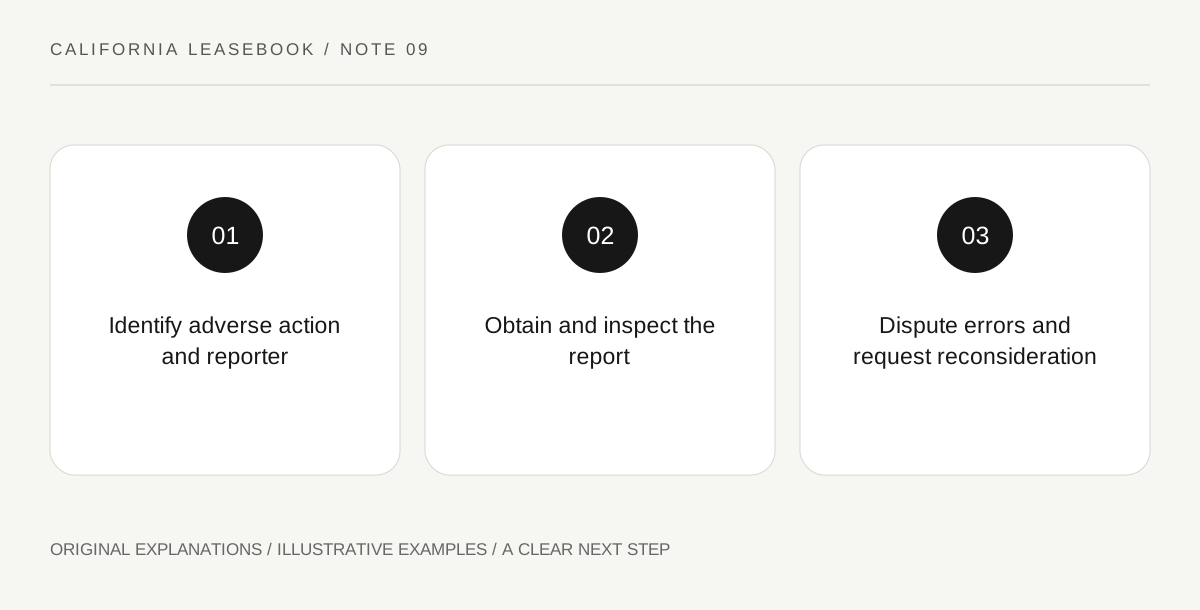
Original explanatory diagram. Read the full method and limitations below.
Recognize an adverse screening decision
FTC explains that a negative decision based on a consumer screening report can include rejection, higher rent, a larger deposit or a required cosigner. If the report contributed to that decision, the Fair Credit Reporting Act provides notice rights. Ask which reporting company supplied the information and request a written copy if the notice was only oral. The reporting company is not necessarily the same business that collected the application fee. Keep the date of the decision because it matters to obtaining a free copy of the relevant report.
Request the actual report promptly
The federal right described by FTC includes a free report from the screening company if requested within sixty days of the adverse-action notice. A credit score shown in a banking app may not reveal the tenant-screening report's eviction records, identity matches or recommendation. Request the report tied to this decision through the company's verified process. Do not pay a stranger claiming to erase the rejection. If a notice lacks the company's contact details, ask the provider and seek consumer-protection assistance about the missing information.
Check whether the report belongs to the right person before debating the interpretation of a record. Similar names, missing middle names and another person's address can produce a different dispute from an accurate record with an incomplete outcome. State the mismatch clearly and include only the identification evidence reasonably needed through the verified dispute channel. Do not send sensitive identity documents to the landlord's informal messenger account just because the error feels urgent. The right recipient and a specific correction request matter as much as the supporting paperwork.
Dispute a specific error with evidence
Read for another person's records, duplicates, incomplete case outcomes or information that should not be reported. Explain each disputed entry and provide copies of evidence showing the correct fact, preserving your originals. For an eviction case that was dismissed, an official disposition may be more useful than a general statement that the prior landlord was unfair. Contact the screening company to dispute its report and tell the housing provider about the dispute. Correcting a court's underlying record can require a separate process; changing one database does not automatically update every other source.
Separate correction from the housing outcome
A corrected report does not guarantee that the unit remains available or that all other screening criteria are satisfied. Ask whether the provider will reconsider and how an updated report should be delivered. FTC explains investigation and written-result rights, and CFPB or legal assistance may be appropriate if errors remain unresolved. Keep California-specific screening and fair-housing protections in view as well; a federal report dispute does not authorize an otherwise unlawful deposit or discriminatory criterion. Address each issue through the rule that applies to it.
A case outcome is missing
Illustrative example: a report lists an eviction filing without its dismissal. The applicant requests the report, identifies that exact entry and provides the dismissal record in a dispute. They also ask the provider whether reconsideration is possible, without assuming that a correction reserves the apartment.
Practical checks
Optional checkboxes save only in this browser.
Questions that come up
Is a required cosigner always outside adverse-action rules?
No. If a consumer report contributed to that requirement, it can be an adverse action under the federal framework described by FTC.
Will correcting the report guarantee approval?
No. It addresses the accuracy problem, while availability and other lawful criteria can still affect the application. Ask about reconsideration directly.
References and scope
These sources support the factual background. Examples and exercises are original illustrative teaching material. References do not imply endorsement.
- FTC tenant background checks and rights — Adverse-action notice, free report within 60 days and disputes of inaccurate screening information.