A disability modification request needs a construction and responsibility plan
A grab bar, doorway alteration or access ramp changes the physical premises. That makes a disability-related modification different from an exception to a rule. A useful request addresses the access need, proposed work, permissions and responsibility without assuming that every project is free or that ordinary alteration restrictions settle it.
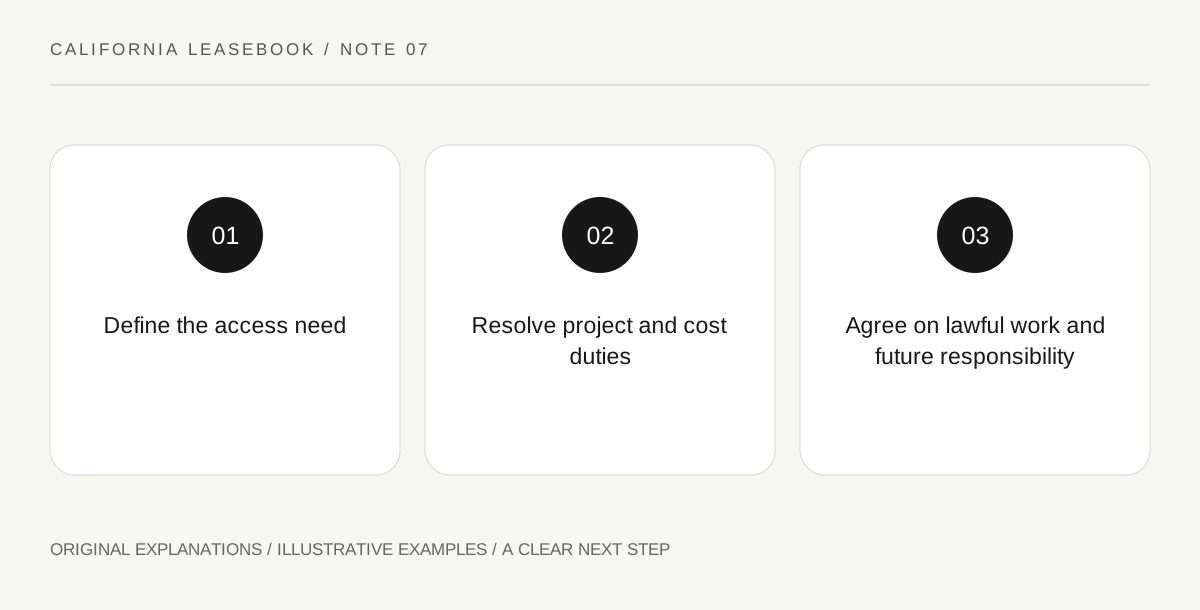
Original explanatory diagram. Read the full method and limitations below.
Define the physical access problem
Describe which feature prevents equal use of the dwelling or common area and what physical change is proposed. Avoid beginning with a particular product if the underlying access need has not been assessed. A qualified professional may be needed to determine an appropriate design, especially for structural work or equipment supporting body weight. CRD distinguishes reasonable modifications from accommodations to policies and practices. Both can be relevant to one household, but their cost and installation questions should not be merged into a vague request to make the apartment accessible.
Clarify who pays before commissioning work
CRD explains that the requesting person is usually responsible for the cost of a reasonable modification, with important exceptions. Responsibilities can differ where an existing accessible feature was not maintained, applicable accessibility requirements were not met or particular subsidized housing rules apply. A voucher tenancy is not automatically identical to every form of subsidized development for this purpose. Ask a qualified fair-housing resource to assess the actual property and programme. Neither an automatic demand that the tenant pay nor an assumption that the landlord always pays is a sound starting conclusion.
Separate a repair of an existing accessibility feature from a request to create a new one. If an already supplied ramp, lift or accessible door mechanism no longer works, record that fact rather than describing the entire matter as a voluntary improvement the tenant wants to purchase. The distinction can affect responsibility and the appropriate route for assistance. A contractor can document physical condition, but payment and fair-housing obligations still need the correct legal analysis. Preserve the original feature's role when discussing an alternative.
Resolve installation and approval conditions
Discuss the proposed design, necessary permits, qualified installers and workmanlike installation before anyone drills, cuts or alters the property. A general no-alterations clause does not end the reasonable-modification analysis, but disability-related need does not authorize hazardous do-it-yourself construction. The provider may have legitimate questions about the work and how it will be carried out within the relevant legal limits. Keep the access objective clear so discussions about materials or methods do not silently turn into a refusal to address the barrier at all.
Ask about maintenance and later restoration
An approved project should have clear arrangements for ongoing condition, access during work and any lawful restoration requirement at the end of the tenancy. Restoration is not a universal automatic obligation for every modification or location, so ask for the basis and get advice if uncertain. Keep photographs and the approved scope without treating a contractor invoice as the entire agreement. If the landlord proposes an alternative design, evaluate whether it effectively addresses the disability-related need with appropriate professional input. The cheapest appearance change may not provide the required access.
A proposed bathroom support
Illustrative example: a tenant needs a bathroom modification for disability-related access. They seek professional design input, ask the provider to consider a defined installation proposal and clarify payment and restoration responsibilities before ordering work. Attaching a retail bar to an unknown wall is not a substitute for that process.
Practical checks
Optional checkboxes save only in this browser.
Questions that come up
Does a no-alterations clause automatically bar the request?
No. Disability-related reasonable modifications require their own fair-housing analysis. The work still needs appropriate planning and lawful installation.
Must every modification be removed at move-out?
Do not assume so. Restoration conditions depend on the modification and applicable rules. Obtain advice before accepting an unclear or blanket requirement.
References and scope
These sources support the factual background. Examples and exercises are original illustrative teaching material. References do not imply endorsement.
- CRD reasonable modifications — Physical access changes, payment responsibility, workmanlike installation and restoration questions.
- California Civil Rights Department housing guidance — Disability-related housing requests, documentation limits and discrimination protections.