A rent dispute does not authorize a landlord to lock out a tenant
Changed locks, removed belongings or deliberately interrupted utilities can create an immediate housing crisis. California's ordinary eviction process uses a court case; a landlord cannot replace it with a personal enforcement tactic. Recognize that distinction while prioritizing safety and obtaining help for the actual facts.
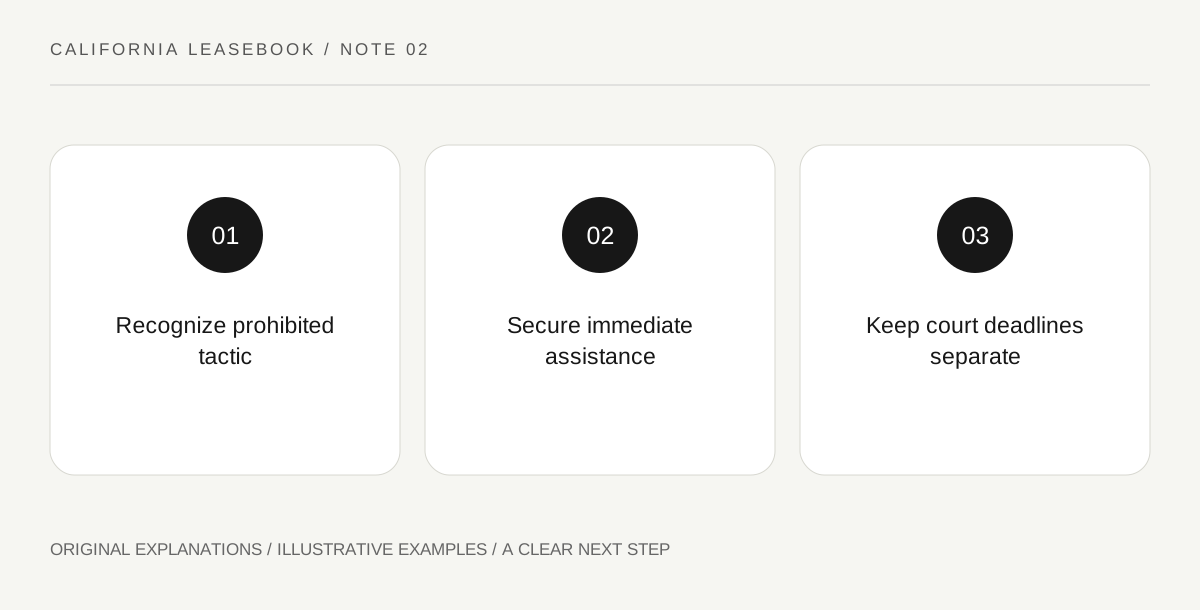
Original explanatory diagram. Read the full method and limitations below.
Separate a demand from legal possession
A landlord may claim that rent is overdue or a lease was violated. That claim does not itself authorize changing locks, removing a tenant's possessions or shutting off essential utilities to make them leave. The Attorney General identifies those tactics as unlawful lockouts. A termination notice and a court judgment are different stages, and even a serious allegation does not erase the required process. Keep the claim and the conduct separate when describing the problem: the amount disputed is one issue, and denial of access is another.
Respond to immediate needs safely
If there is an emergency, danger to a person or a hazardous utility condition, use the appropriate emergency or utility response route. Do not attempt forced entry, restore an electrical or gas connection yourself or confront someone in a way that puts people at risk. Contact qualified legal help promptly about restoring access and available remedies. If you speak with law enforcement or a housing authority, describe exactly what happened and show evidence of occupancy when safely available. This article cannot decide which immediate court order or local response fits an individual situation.
Proof of occupancy can include the lease, recent rent receipts and other relevant records, but avoid exposing a complete identity archive during a stressful encounter. Share what the legitimate responder needs through a suitable route. If access to medication, mobility equipment or essential documents is affected, explain that promptly without attempting a dangerous recovery. A clear statement of immediate needs helps a lawyer or responding agency assess urgency separately from the longer dispute about money, property or the reason the landlord wants possession.
Distinguish a shutoff from an outage
A building-wide utility failure, a provider billing issue and a landlord's deliberate interruption can have different causes and legal implications. Ask the verified provider about the service status where appropriate, and preserve any message connecting a shutoff to a demand that you leave. Record observable facts without declaring a technical cause you cannot establish. If a landlord controls the utility account, explain that when seeking help. A normal maintenance outage should not be confused with coercion, but an explanation labelled maintenance should not prevent examination of contrary evidence.
Keep court papers on their own timetable
Seeking help about a lockout does not automatically resolve a separate eviction lawsuit or extend a response deadline. If court documents arrive, take them to the adviser immediately and confirm what must be filed and served. Similarly, a conversation promising to restore access may not settle unpaid-rent allegations, property losses or a claim for damages. Ask which issues remain open before signing an agreement or accepting money. A practical resolution should make clear what access is restored and what, if anything, the parties are agreeing to release.
Two problems at once
Illustrative example: a tenant disputes a late fee and later finds the lock changed. They describe both issues to legal aid and seek urgent access assistance, while separately checking whether any court papers require a response. The late-fee disagreement does not make a lock change an ordinary collection method.
Practical checks
Optional checkboxes save only in this browser.
Questions that come up
Can unpaid rent justify removing my belongings?
A landlord cannot use removal of possessions as a substitute for the lawful eviction process. Obtain prompt advice about the actual conduct and available remedies.
Should I force the door open?
Avoid escalating danger or attempting hazardous self-help. Seek appropriate emergency assistance where needed and qualified legal help about restoring access.
References and scope
These sources support the factual background. Examples and exercises are original illustrative teaching material. References do not imply endorsement.
- California Attorney General landlord-tenant issues — Prohibited lockouts, Tenant Protection Act scope, local overlays and fair housing.
- California Courts: tenant notice types — Different pre-lawsuit notices, their purposes and programme-specific differences.