An entry notice needs a permitted purpose as well as a time
A notice saying that a landlord will enter tomorrow raises several separate questions: why entry is proposed, how notice was given and which timing rule applies. Reading those elements separately is more useful than assuming that the phrase twenty-four hours either permits every visit or forbids every exception.
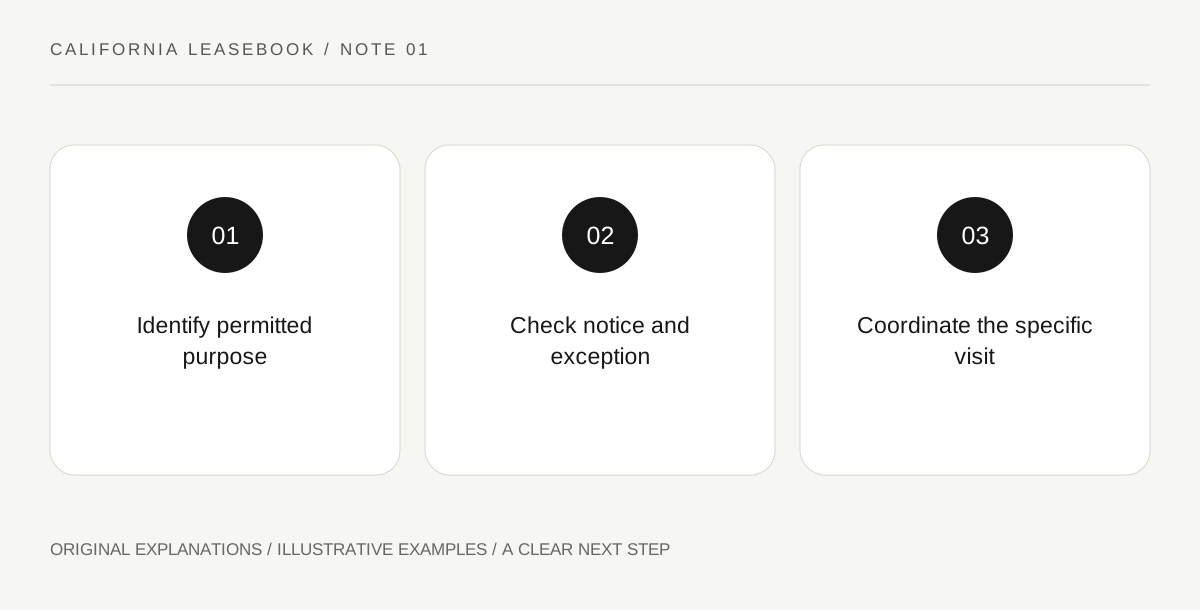
Original explanatory diagram. Read the full method and limitations below.
Start with the reason for entry
California entry rules identify permitted reasons rather than giving a landlord unrestricted access to an occupied home. The DRE guide describes repairs and agreed services, showings, specified inspections, emergencies and other authorized circumstances. A label such as general inspection does not by itself establish a permitted purpose. Ask what work or legally authorized activity is intended and which areas are involved. Keep the actual wording of the notice; do not replace an unclear reason with your own assumption about what the visitor probably wants to do.
Read timing and delivery together
In ordinary circumstances, the notice should state the date, approximate time and purpose, and entry is generally during normal business hours. Twenty-four hours is a presumption of reasonable advance notice in many situations, not a universal rule for every method and circumstance. The guide describes a different presumption for mailed notice and exceptions such as emergencies or consent at the time. A showing to a purchaser can involve additional specific rules. Compare the situation with the applicable category before concluding that the number alone resolves it.
An entry notice may also include work that has practical consequences beyond the visit, such as moving furniture away from a repair area. Ask which preparation is actually needed and who will perform it, particularly where a disability or heavy item is involved. Do not read a request to provide access as a demand to perform hazardous work yourself. Separating the entry permission from preparation responsibilities can resolve a disagreement that otherwise sounds like a refusal to allow the repair at all.
Communicate about practical access
If the purpose is understood but a practical problem exists, describe it promptly: a household accessibility need, a pet that requires arranging or a conflicting appointment. Ask for clarification or an agreed adjustment while keeping lawful access obligations in view. Do not assume that being absent automatically prevents entry or that a tenant must remain home for every authorized visit. Conversely, a broad lease clause is not a reason to disregard statutory limits. If disagreement persists, seek qualified advice rather than physically confronting a worker or changing locks as an improvised response.
Distinguish coordination from consent to anything
A reply offering a suitable repair time is specific coordination, not blanket permission for all future visits. State which date, purpose and arrangement you are discussing. If entry occurs differently from the notice, write a factual account of what you observed and ask for an explanation through the verified management contact. Avoid declaring every discrepancy a completed legal violation without considering exceptions and evidence. Repeated unexplained entries or harassment deserve prompt legal assistance. Entry rules and disability accommodation requests can interact, so identify both issues when asking for help.
A vague inspection message
Illustrative example: a tenant receives a message saying only 'inspection tomorrow.' They ask for the specific purpose, approximate time and applicable notice arrangement, and explain an access concern. This produces a focused question for a housing adviser instead of a debate about whether the word inspection always permits entry.
Practical checks
Optional checkboxes save only in this browser.
Questions that come up
Does twenty-four hours authorize any inspection?
No. The purpose and the applicable entry rules still matter. Reasonable notice is one element, not a substitute for an authorized reason.
Must I always be home?
Do not assume that. Authorized entry can occur while a tenant is absent, depending on the circumstances. Resolve practical arrangements and seek advice about a disputed notice.
References and scope
These sources support the factual background. Examples and exercises are original illustrative teaching material. References do not imply endorsement.
- California DRE tenant guide, 2026 edition — Current state guidance on entry, repairs, payment, survivor termination, photographs and tenancy categories, with statutory references.