An Oakland move-out offer is a negotiation with its own protections
An offer of money to leave an Oakland rental is different from an ordinary notice ending a tenancy. The city's move-out agreement rules address disclosures and the agreement process. Before evaluating the amount, understand what is being requested, which protections apply and what rights a proposed signature may affect.
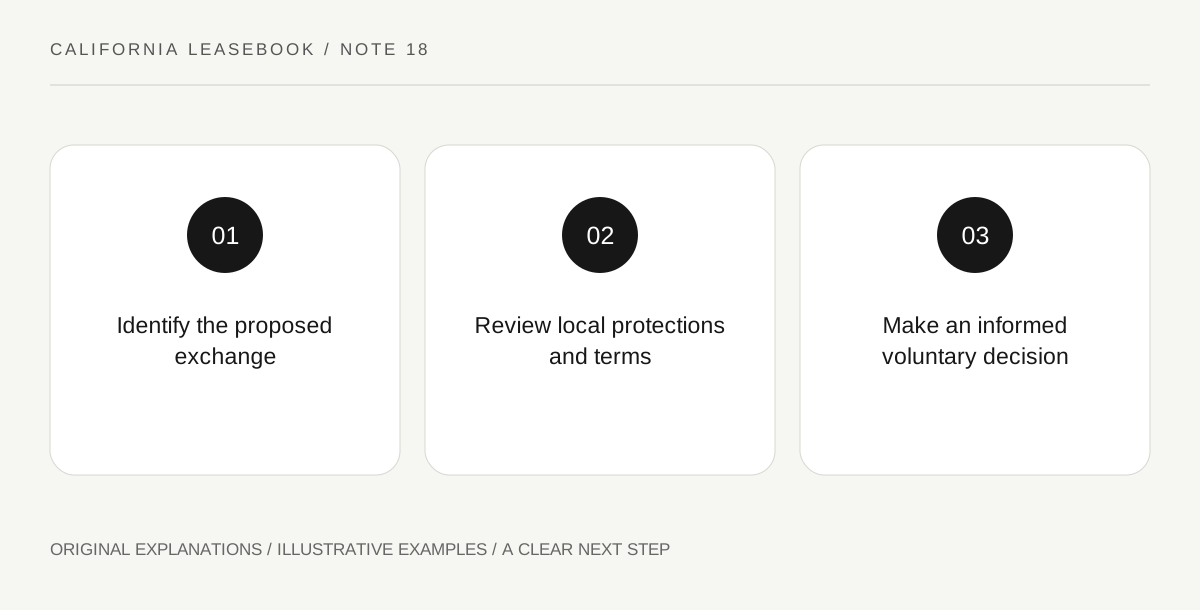
Original explanatory diagram. Read the full method and limitations below.
Identify the proposal as a move-out agreement
Ask whether the owner is offering compensation in exchange for voluntarily giving up possession, and obtain the full proposed terms. A letter labelled relocation, settlement or cash for keys can still need analysis under the relevant local framework. Oakland publishes a Tenant Move-Out Agreement Ordinance and official information for this process. Do not assume that an owner's preferred name removes the rules. Conversely, a legally required relocation payment in a qualifying termination is not automatically the same transaction as a separately negotiated agreement to move.
Review disclosures and the opportunity for advice
Use the city's current disclosure materials and ask for qualified legal advice before signing. The process includes specific protections concerning negotiations and rescission, so an owner's demand to sign immediately should not replace a review of the applicable rule. Do not rely on a generic cooling-off period from another city or contract type. Ask the adviser how the actual agreement's execution date, language and any proposed shortening of a period affect your options. If an agreement has already been signed, seek help promptly rather than waiting for the planned moving day.
Ask who must sign and when the agreement is considered fully executed. That matters to reviewing any rescission period and to knowing whether a draft is still being negotiated. If several adult tenants are involved, one person's verbal acceptance should not be assumed to settle everyone else's position. Ask the adviser about signatures, language access and delivery of a complete copy. Keep a proposed revision separate from the signed version so a later discussion does not rely on a draft term that never became part of the actual agreement.
Compare the complete exchange
List the compensation, payment timing, surrender date, treatment of the deposit and any release of claims. Ask what happens if payment is late, the parties disagree about condition or a new home is unavailable. A large headline amount can obscure a broad waiver or money payable only after possession is surrendered. Keep ordinary rent, deposit principal and negotiated compensation separate so one is not counted as another. Consider practical replacement-housing costs without treating them as a legal formula for what every tenant must receive.
Keep a voluntary decision distinct from threats
A tenant should understand the right to decline negotiations or an agreement under the local protections. If offers continue after a refusal or are accompanied by threats, preserve the actual communications and seek the city's or a lawyer's guidance about harassment and the appropriate response. Do not assume that signing an offer is the only way to avoid an eviction, or that rejecting it makes a later notice automatically invalid. A proposed buyout and any separate termination or court case must each be assessed. A review should clarify both the negotiated rights and the underlying tenancy position.
A payment after surrender
Illustrative example: an owner offers an attractive sum but the draft says payment occurs after the tenant gives up possession and releases all claims. The tenant asks a lawyer to review timing, protections and the release before signing. The headline amount alone does not explain the bargain.
Practical checks
Optional checkboxes save only in this browser.
Questions that come up
Is an offer the same as an eviction notice?
No. A negotiated move-out proposal and a notice or court case are different processes. Each needs its own assessment.
Can I use another city's cooling-off rule?
No. Use Oakland's current ordinance and the actual agreement. Seek prompt advice about the applicable rescission requirements and timing.
References and scope
These sources support the factual background. Examples and exercises are original illustrative teaching material. References do not imply endorsement.
- Oakland tenant move-out agreement ordinance — Local regulation of compensation offers to vacate a rental unit.
- Oakland move-out agreement information sheet — Tenant disclosures, voluntary decision-making and protections in negotiated move-out agreements.